How to Choose the Right Magnetic Crane for Your Industrial Needs in 2025
In the ever-evolving landscape of industrial operations, the selection of the appropriate equipment is crucial to enhancing efficiency and productivity. Among the various types of lifting devices, the Magnetic Crane stands out for its ability to handle heavy ferrous materials with precision and ease. As we approach 2025, industries must navigate an increasingly competitive market, making informed decisions regarding their equipment investments. This article aims to provide insights into choosing the right Magnetic Crane to meet specific operational needs.
Understanding the various features and configurations of Magnetic Cranes is essential for optimizing lifting capabilities. Factors such as load capacity, power source, and operational environment play a pivotal role in determining the most suitable crane for a given application. Furthermore, advancements in technology and design have introduced innovative options, allowing businesses to enhance their operational processes. In this overview, we will explore the critical elements to consider when selecting a Magnetic Crane, ensuring that industrial requirements are fully met while maximizing efficiency and safety.
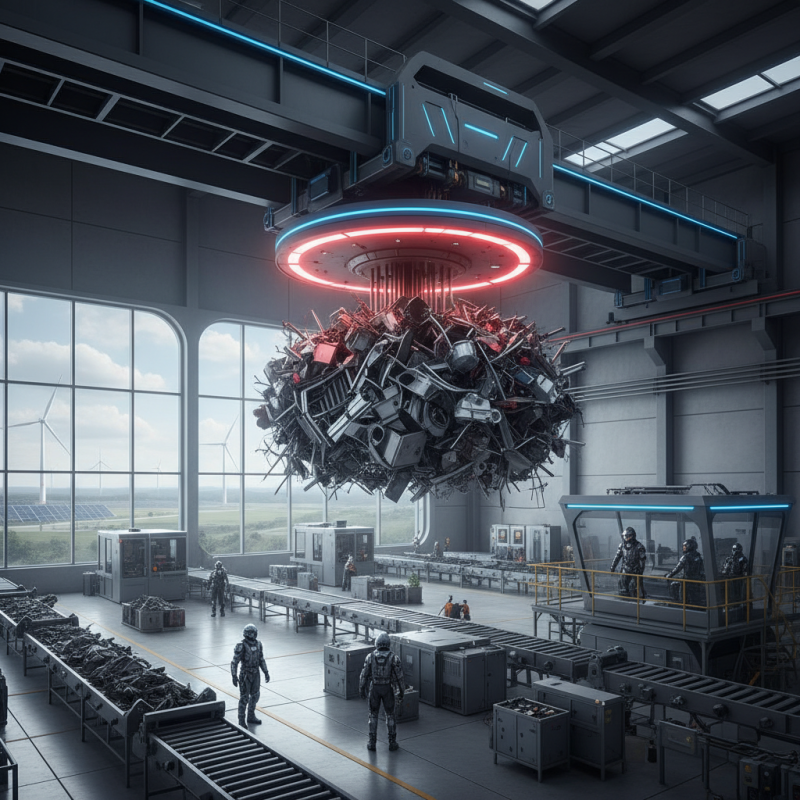
Understanding Magnetic Cranes and Their Applications in Industry
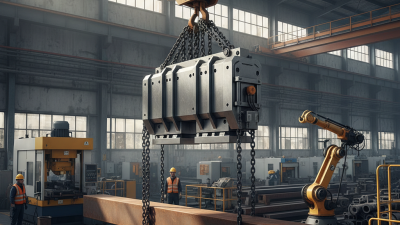
Magnetic cranes are essential tools in various industrial sectors, providing efficient and reliable solutions for lifting and transporting ferrous materials. These cranes utilize powerful electromagnets or permanent magnets to secure and move heavy loads, making them invaluable in operations like manufacturing, scrap handling, and construction. Understanding the specific applications of magnetic cranes is crucial for selecting the right model for your industrial needs, particularly as technology continues to evolve in 2025.
In industries such as metalworking and recycling, magnetic cranes facilitate the handling of heavy steel parts, scrap metal, and other magnetic materials. Their ability to quickly grab and release loads enhances productivity and minimizes downtime. Additionally, in environments where safety is paramount, magnetic cranes reduce the risk of accidents associated with manual lifting and transporting of heavy items. A good grasp of the different types of magnetic cranes—such as those equipped with varying lifting capacities and operational ranges—enables businesses to choose a system that aligns with their operational scale and efficiency goals.
Key Factors to Consider When Choosing a Magnetic Crane
When selecting the right magnetic crane for your industrial needs in 2025, several key factors must be taken into account to ensure optimal performance and safety. Firstly, consider the load capacity. As per industry reports, a significant percentage of manufacturing facilities experience inefficiencies due to insufficient load handling capabilities. It's crucial to evaluate both the maximum weight you plan to lift and the potential future increases in load as your operations expand. A crane that can accommodate future demands minimizes the risk of accidents and downtime.
Another critical aspect is the operational environment. Magnetic cranes are significantly influenced by their surroundings—temperature, humidity, and the presence of dust or corrosive materials can affect both the crane's performance and its longevity. A recent survey indicated that over 40% of crane failures are attributed to environmental factors. Thus, ensuring that the selected crane is designed for the specific conditions of your workplace is essential for maintaining productivity.
**Tips:** Regular maintenance checks, ideally every six months, can greatly extend the lifespan of your magnetic crane. Additionally, consider the ease of integration with existing systems; a crane that combines well with your infrastructure will enhance workflow efficiency significantly. Lastly, investing in training for your operators can minimize errors and improve overall safety.
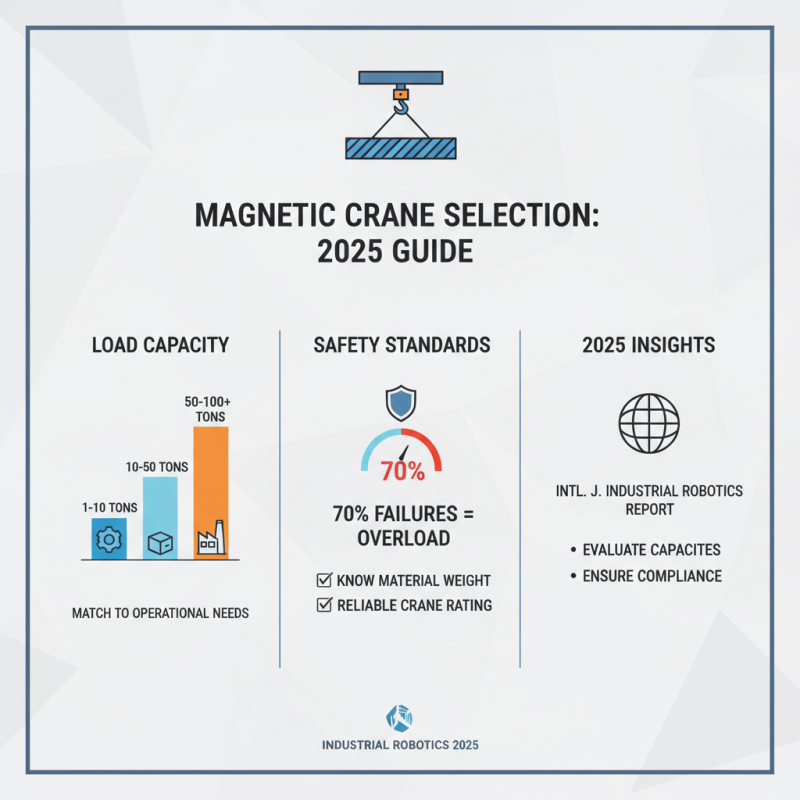
Choosing the Right Magnetic Crane: Key Factors in 2025
Different Types of Magnetic Cranes and Their Features
When it comes to selecting the right magnetic crane for your industrial needs, understanding the different types available is crucial.
Magnetic cranes can generally be classified into
overhead magnetic cranes,
mobile magnetic cranes, and
ship mounted magnetic cranes.
Overhead magnetic cranes are designed for fixed installation in manufacturing plants, allowing for efficient movement of heavy metal parts across distances.
Mobile cranes, on the other hand, offer versatility and can be transported to various job sites, making them ideal for construction or demolition tasks.
Ship mounted cranes are specifically tailored for maritime use, providing effective lifting solutions for docking and loading operations.
Tips for choosing the right type of magnetic crane include:
- Assessing the workload and the specific materials you’ll be handling.
- For more stationary tasks, an overhead crane might suffice, while a mobile crane is better suited for dynamic environments.
- Consider the lifting capacity of the crane; selecting a model that meets or exceeds your maximum load requirement will ensure safety and efficiency.
- Evaluate the operational environment, including factors such as space constraints and potential hazards that could impact crane operation.
Another key feature to examine is the
magnetic lifting system itself.
Different designs, such as permanent or electro magnets, can affect the performance and handling of various materials.
Permanent magnets are often more durable and maintenance-free, while
electro magnifying options provide greater control for specific lifting requirements.
Assessing these features alongside your operational needs will guide you in selecting a magnetic crane that maximizes productivity and safety in your industrial settings.
Evaluating Load Capacities and Safety Standards
When selecting the right magnetic crane for your industrial needs in 2025, evaluating load capacities and safety standards is essential. Modern magnetic cranes typically offer load capacities ranging from 1 to 100 tons, but the specific requirements will depend on your operational needs. According to a recent report from the International Journal of Industrial Robotics, approximately 70% of operational failures in cranes are directly related to exceeding load capacities. Therefore, understanding the weight of the materials you intend to lift and ensuring your crane can handle it reliably is crucial for safety and efficiency.
Safety standards play a significant role in selecting the appropriate magnetic crane. Compliance with recognized safety regulations, such as those set by the Occupational Safety and Health Administration (OSHA) and the American National Standards Institute (ANSI), is vital. These standards not only outline the necessary safety practices but also dictate the testing procedures for load capacities. Data shows that facilities adhering to these guidelines experience 50% fewer accidents related to crane operation.
Tips: Always consult with experts when determining your load requirements and regularly inspect your equipment to ensure it meets safety standards. Additionally, consider incorporating overload protection features to further enhance safety and prevent accidents. Regular training for operators can also significantly reduce risks associated with crane operation.
Budgeting for Your Magnetic Crane Investment in 2025
When planning your investment in a magnetic crane for 2025, budgeting effectively plays a crucial role. Begin by assessing the various costs associated with the crane, including initial purchase price, installation fees, and necessary modifications to your facility. It's essential to look beyond the sticker price and consider the long-term operational expenses, such as maintenance, energy consumption, and potential downtime. A comprehensive budget allows you to make informed decisions and avoid unexpected financial burdens down the line.
Additionally, consider the potential return on investment (ROI) when budgeting for your magnetic crane. Assess how the crane's efficiency and productivity improvements can offset its costs over time. Factor in the increased safety and reduced labor costs that a magnetic crane can provide, which further justifies the initial investment. Collaborating with financial advisors and equipment experts can help refine your budget to align with your operational goals and financial capabilities, ensuring that you secure the right magnetic crane tailored to your industrial needs while staying within budget.